Trip duration
Number of nights
0 - 9
Country Region
Type of sailing activity
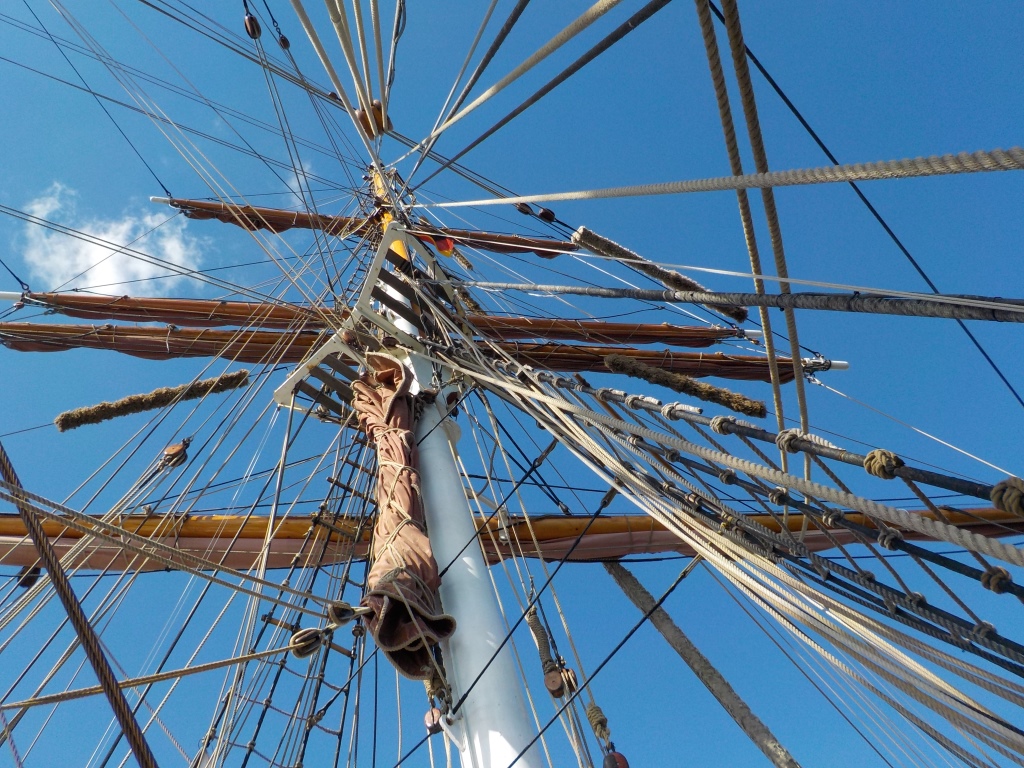
Get ready for your next sailing trip! Basic knowledge is helpful so that you can understand what is being talked about on board. In this article, we take a look at some sailing terms and explain nautical vocabulary. The terms and phrases used are part of a clear communication method for easier understanding. To help you prepare for your trip, here are some of the most important terms from the sailor's language.
Both on board traditional tall ships such as the Eye of the Wind and on smaller sailing yachts, there are commands, pieces of equipment and traditions that you need to hear about first in order to understand them. If you would like to exchange a few technical terms with the crew and your fellow travellers on your next sailing trip, here are a few common words from nautical jargon.
Ahoy: sailor’s greeting, used both when greeting and saying goodbye.
aft: rear part beyond the centre of the ship.
Beaufort scale: scale for determining the wind force.
bow: front end of the ship.
bunk: sleeping quarters on board, cabin or small storage room on a ship.
buoy: a floating object on the surface of the water that indicates underwater hazards or marks a position.
choppy: rough seas caused by waves coming from two different directions.
crow's nest: lookout on the front mast.
davit: holding device for lifeboats and dinghies.
dinghy: a small inflatable boat attached to the ship, used for crossing between the ship and land or between two ships.
dock (also quay or pier): mooring place for ships.
embarkation: boarding the ship.
fender: a balloon-like protective device that hangs down from the side of a ship or pontoon to prevent damage to the outer hull during harbour manoeuvres and when moored alongside a quay wall or alongside another ship.
figurehead: a figure mounted under the bowsprit that is supposed to bring good luck, usually in the form of a pretty woman.
foremast: the front mast.
galley: the kitchen of a ship.
gyb: turn around, change course with the stern through the wind.
jib: headsail (in front of the mast).
jib boom: a spar that extends beyond the forecastle on the bowsprit and to which the foresails are attached.
keel: lower longitudinal stiffener of the ship.
lateen sail: triangular sail.
laying the keel: when a shipyard begins building a boat, similar to laying the foundation stone of a house.
Lee: the side away from the wind, opposite of windward.
Windward: the side facing the wind, opposite of leeward.
main mast: the second, taller mast.
midship: the centre part of a ship between the bow and the stern.
mizzen mast: the rear mast.
nautical mile: distance measurement: 1.852 km.
port side: to the left in the direction of travel.
railing: handrail on a ship.
rigging: all ship sails.
shoal: when there is not enough water under the ship, e.g. a pile of sand or rocks or stones.
soul seller: term for a ship that is unfit to sail but still wants to set sail.
square sail: rectangular or trapezoidal sail attached to a round spar called a yard.
starboard: to the right in the direction of travel.
stern: rear part of the ship.
turn in, turn towards: reduce speed and turn a ship towards the wind so that it offers little resistance.
wake: the path left by a ship as it moves through the water („to swim in someone’s wake“ also means to follow closely behind them).
yawing: turning the ship back and forth along its longitudinal axis.
This will ensure that you are well prepared for your first sailing trip and many more to come. Take a look at our sailing schedule now.